
Cannes AI help you?
What we learned (from afar) about AI and design from this year's Cannes Lions festival...

What is Cannes Lions? It depends who you ask. It’s an award show, a conference, an adtech festival and a creator marketplace. It’s beachfront tech cabanas, brand activations and never-ending rosé. It’s where deals happen and connections are forged. It’s a “soulless corporate boondoggle… populated mostly by paunchy middle managers and YouTubers.” It’s the friends you make along the way.
Some years ago, the festival’s ad agency focus shifted towards big tech. This year, creators took centre stage and Cannes regulars were struck by how this changed the vibe again.
On a much smaller scale, the design presence at Cannes also appears to be growing. This year there seemed to be more designers there, many attending for the first time. This is driven in part by COLLINS House, hosted by the eponymous agency, which has carved out a less network-y, more creative space in the hills above the city.
“The Croisette is the Croisette, and you’re never going to turn Cannes into OFFF,” says Bob Sanderson, creative director of Peter & Paul (one of this year’s first-timers). “But with COLLINS House, and the Google Creative House, it’s shifting more into the nuance of great design, and I think that contrast is beautiful.”
All this means, according to design PR firm Red Setter, that Cannes has become “one of the most important places for brand design to show up.”
And that means, for our purposes, it’s worth digging into what Cannes can tell us about the future of AI and design. I wasn’t there, but I have read through dozens of social posts, takeaways, wrap-ups and press articles to pull out the most interesting things and try to connect the dots. Here’s what I found…
Posts like this take a load of time and effort, but I believe they’re worth it. If you do too, please consider becoming a paid subscriber.
AI everywhere
Arriving at Nice airport, visitors were met with a billboard from AI company Hightouch, inviting them to “Build an ad campaign before baggage claim.” This set the tone for Cannes Lions 2026 – AI was everywhere.
“AI dominated almost every stage and every meeting in Cannes last week,” according to Craig Inglis, global chair of The Marketing Society. But AI’s influence went way beyond the official programming, as Unmissable CEO Nishma Patel Robb noted.
“AI was inescapable. By day three, nobody would have handed me an AI rosé, but I wouldn’t have blinked if they had. Everything had two letters bolted to the front of it. AI cuppa, AI rosé, AI everything, slapped on the front of things that were, on closer inspection, just things.”
Fantasy land
Many people identified a gap between the hype and frenzy around AI, and the reality of how much it’s actually changing the creative industry. “Agentic AI is everywhere and nowhere,” Brian Morrisey wrote.
“Amazon, Adobe and untold others are trumpeting agentic advertising. Privately most agree this is a classic fake-it-till-you-make-it situation… I read breathless threads about how Anthropic has a one-person marketing team with a guy running hundreds of agents. This is fantasy land.”
Genuin CMO Matt Wurst picked up on this disconnect, noting the difference between brash public statements and more vulnerable private conversations. “The stuff people say on stage and the stuff people say after the second bottle of rosé nobody ordered are two completely different festivals,” he wrote. “And this year the gap between them was the whole story.”
“AI. Agentic. Orchestration. Outcomes. Everyone said the words with total confidence and identical phrasing, which is usually a sign that nobody’s quite sure what they mean. Off stage, the confidence evaporated.”
The real story about AI, he suggested, is a story about revenue, as token costs go “from a rounding error to a line item that scares the finance team.”
Alex Brownstein found the exact same thing. “On stage, the AI story was all upside. Off stage, it had turned into a procurement conversation. The honest question on the Croisette wasn’t whether the models work. It was what they cost to run, and why the bills weren’t behaving the way the projections promised.”
Creative partners not robot overlords
All of this contributed to a new type of conversation. Arthur Sadoun, CEO of The Publicis Groupe, began his talk with a film that made fun of AI’s previous overpromises (I’ve been trying to track this down, but no luck so far).
Material’s Oscar Yuan said the “unabashed ebullience” around AI in 2025 had given way to, “a more calibrated sobriety about both the wonders and the limits of AI in marketing.”
Tom Morton, founder of strategy consultancy Narratory Capital, went further. “I think the tide is turning for how big tech companies introduce AI progress to the world.”
He remembered that two years ago, then OpenAI CTO Mira Murati told the audience that “maybe the creative jobs lost to AI probably shouldn’t exist in the first place.”
“Last week, AI leaders showed up as creative partners, not as robot overlords.”
He was delighted that Microsoft used its main-stage slot to host a conversation with Ian Leslie, who’s just written a book about John Lennon and Paul McCartney’s very personal creative collaboration. It explores, Morton noted, “what AI can learn from human creative partnerships, not the other way round.”
Creativity matters
Tubi CMO Nicole Parlapiano also noticed this shift, and provided Ad Age with one of my favourite quotes of the year.
“There were too many instances on multiple stages last year where we’ve got a tech guy telling a creative agency they’re going to put them out of fucking business, and I think that’s not really the case, so we’re kind of turning the corner. There is more of a tone and more of a tenor that the taste and the creative strategy still has to come from humans.”
Creativity, it seemed, had re-entered the chat. Ragged Edge co-founder Max Ottignon says that, “Most people were desperate to talk about anything other than AI. Like, you know, creativity…”
Copy and brand voice expert Vikki Ross found the same thing.
“My main takeaway from all the talks I saw is that the speakers – big names in big brands and big agencies – believe in the value and the power of human creativity. Human insights, human ideas and human behaviours too.”
She quoted Polaroid’s creative director, Patricia Varella, who encouraged creatives to “fight for the work that gives you goosebumps.”
“20 years ago, technology was a privilege – now, it feels like the privilege is being able to escape from it, so hold onto analogue,” Varella said.
That instinct could be seen around the festival. Strategist and Cannes Lions speaker Amy Daroukakis noted that many of the big tech brands, including Google, Netflix and Canva, had physical postcards as part of their brand experiences.
Rather than AI replacing creatives, Vikki Ross found that brands are interested in “how they can use AI to communicate with more consumers more quickly.”
But there’s a risk there too – “that brands use it to replicate what already exists, rather than reach for what doesn’t yet,” as marketer and author Leila Fataar noted.
“Automation at scale produces sameness at scale, and sameness is already one of the most expensive problems in brand marketing.”
What AI can do
Out went terrifying talk of an existential creative crisis. In came practical discussions about how best to use AI.
“It finally felt more like a tool, or creative infrastructure,” Amy Daroukakis noted, while design podcast and PR supremo Claire Blyth was encouraged to hear lots of people discussing, “how they’re using AI to make themselves better and finding holes in what they’re doing.”
For Danny Miller, CEO of Human After All, creatives are using AI to take their work to another level. “Everyone’s settling into a groove, and just letting it empower the shit out of their creativity,” he told me.
Bob Sanderson agrees, based on his own experience and what he heard from agencies like Dept and Porto Rocha. For him, AI has become an “inspiration assistant” to produce work that both “mirrors his thinking” and provides “happy, unpredictable” twists.
A new contract for the web
It is worth noting that while AI may not replace creativity, it will alter the conditions in which it operates. The New York Times believes that we’re entering a new era of the internet.
“As the global advertising elite gathered aboard superyachts and inside beachfront villas, the conversation shifted from how to win human attention to a much more urgent, existential question: How do you influence an AI model?”
One of the people quoted in that piece was James Cadwallader, CEO of Profound, a company that helps brands track how they’re cited by AI models. “Two things we believe deeply, and heard validated ALL week,” he wrote.
1. Every company on the planet will care about how AI talks about their brand, their products, and their services.
2. Every marketer will use AI every day, not just to work faster, but to do a kind of marketing that wasn’t possible before.
This will change what designers are asked to do, and how they’re asked to do it.
The need for real talk
To grapple with these changes, designers and other creatives need to have messy, nuanced and sometimes tough conversations. But these were largely lacking on official stages.
“Conference slop” was one of the phrases of this year’s festival. Koto’s James Greenfield bemoaned the proliferation of “glib talking points” which created “a circus of ‘We have our shit sorted’ peacocking.”
Similarly, AirOps’ Jessica Rosenberg got bored of the “perfectly media trained execs on panels” and, like Greenfield, found herself “craving healthy disagreement.” She found what she was looking for at COLLINS House, which provided a much-needed “antidote.”
That, according to Brian Collins, was very deliberate. He attended two AI panels along the Croisette, “then ran.”
“Cannes mistakes volume for insight. Again. We feared AI would give permission to confuse autocomplete with intelligence. We feared panels would promise revolution and not show it. We were, sadly, right.
“But Cannes did prove this: artificial intelligence is not the problem. Lack of curiosity, tasteless design, lazy minds, retina-burning creative choices and lockstep conformity remain comfortably ahead.”
COLLINS House, he explained, was designed as a hub of “full-on inspiration.” It was decorated by local artists to look like “a mad painting” and its programming brought together CMOs with artists like the musician Seal.
Hope is in the air
The COLLINS House approach worked. As creative consultant Jasmine Gallagher puts it, “The more intimate the environments, the better the conversations.”
She didn’t come away totally confident about AI’s potential impact on the creative industry. “Part of me thinks we’re not as scared as we should be,” she wrote. “We’re becoming immune to the impacts of AI, the models trained on our work, and the knock-on effect on storytelling, craft, and the essence of creativity.”
But others, like Among Equals co-founder Emily Jeffrey-Barrett, felt much more confident. In 2025, she said, AI felt “like a tsunami people knew was coming, but weren’t sure exactly when or how catastrophic it would be.”
This year, the conversation was marked by restraint and practicality.
“And a huge sense of hope – a focus on the joy of being human, creating, making, connecting, and a conviction that THAT is something that’s going nowhere. Because no-one wants it to.”
A winning feeling
Which brings us to the awards themselves. Reflecting on the work that won big, AdWeek’s Brittaney Kiefer noted that predictions of AI dominance proved unfounded.
“Before Cannes Lions, some predicted that this would be the year when AI-created work would break out at the festival, pointing to the direction the ad industry is heading… However, this year’s award winners told another story. AI hype has died down. What’s emerged instead is a more nuanced approach to the technology, where AI is used to bolster human creativity.”
There was a Grand Prix for Isle of Any’s incredible Coinbase ad, which went out of its way to prove it wasn’t made with AI.
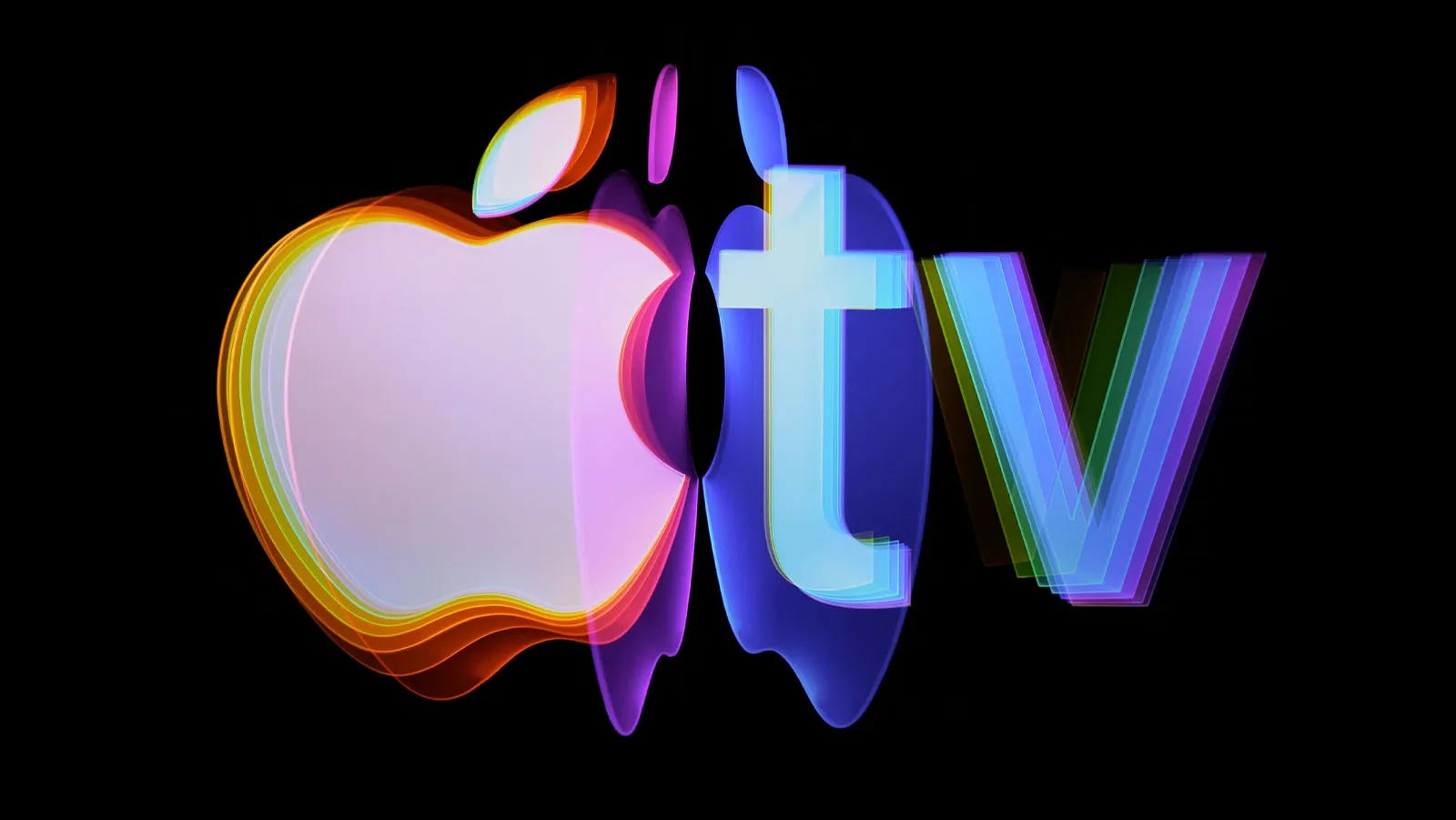
There was a Grand Prix for Apple TV’s ident crafted out of glass. And, perhaps most tellingly, there was a Grand Prix for Claude’s Superbowl ads.
“The whole joke is the absurdity of AI marketing,” Nishma Patel Robb wrote. “It won the biggest trophy in the building anyway. “