
"Like a frozen risotto" – Special Projects on AI's design skills
Why the studio wants to create AI experiences that feel more human.

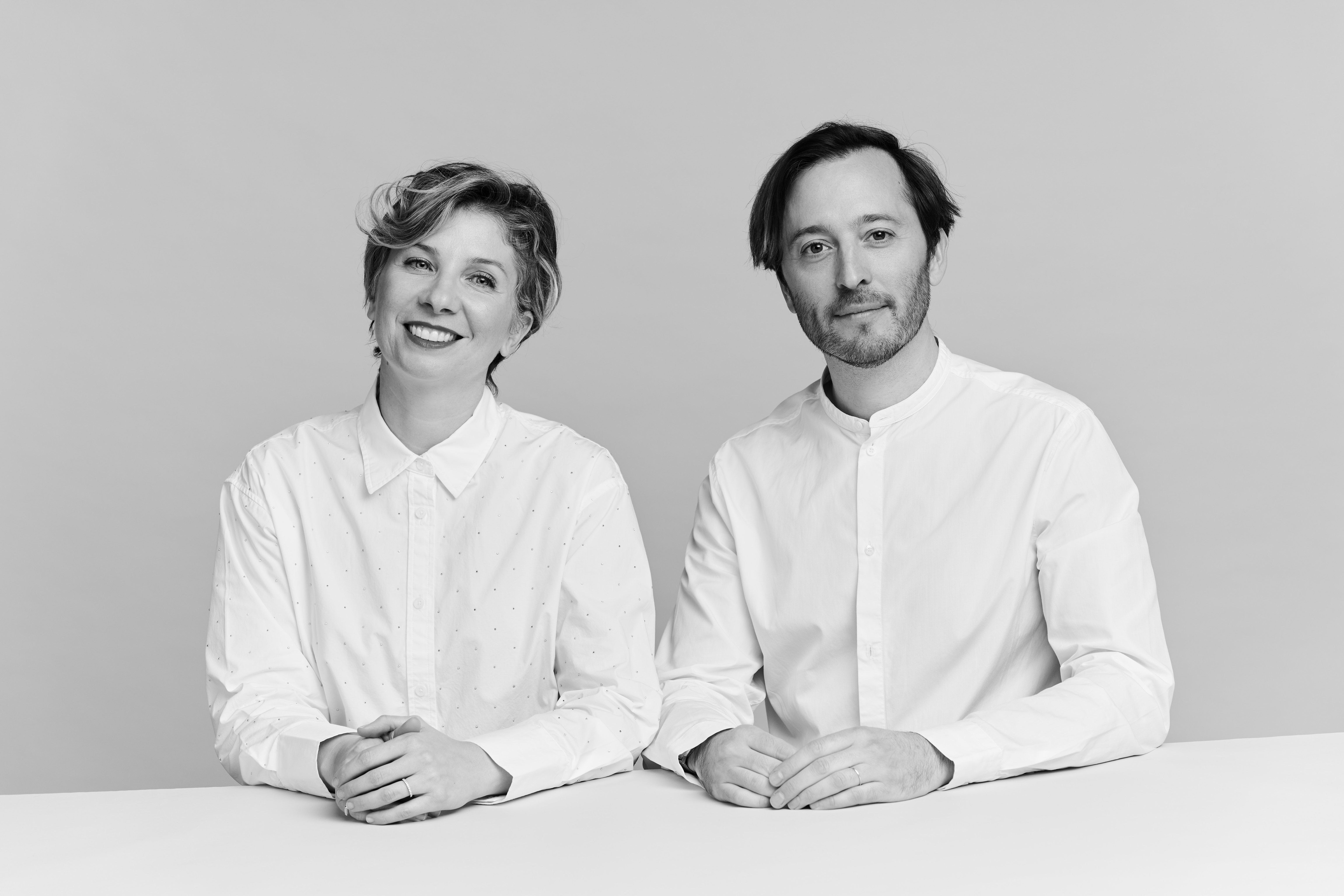
For many of us, AI crashed into our lives when ChatGPT launched at the end of 2022. But others have been thinking about AI for much longer, like London-based studio Special Projects, which has been working with it for ten years.
That gives co-founders Adrian Westaway and Clara Gaggero Westaway a rich, nuanced and sometimes surprising way of thinking about AI’s relationship with design.
They help clients from tech companies to the UK Government explore new AI experiences, often finding real-world analogies to make digital interactions feel more human. AI also shows up in the studio’s self-initiated projects, like Aperture, which helps people reduce their phone use.
In our interview we discuss:
How a dogs’ home inspired their early AI explorations.
Why truly “special” design requires craft and time and care.
Why conviction is all-important and designers need to stand behind their ideas.
You’ve been working on AI since 2018, what were those initial projects focused on?
Adrian Westaway: One of the ideas we were exploring was, what if you choose your agent and they have different qualities? We were looking at examples where you choose something that’s a bit intangible, like a perfume, which is very hard to describe.
We went to Battersea Dogs & Cats Home, to find out what it’s like to choose a dog. It’s fascinating because they have a fake living room that you can go in and sit on the sofa with your dog, to see what it feels like.
Like all of our work really, it was about finding these real-world examples and translating them into digital experiences.
Between then and now, what changed about the way people were thinking about AI?
Clara Gaggero Westaway: The assumption back then was that AI would come out of the box in like an infant form, almost telling you, “I need you to train me to be good. Without the training, I’ll be rubbish.”
So it was a very different relationship that was envisioned. It would have been great if the possibility of AI making mistakes would have been more acknowledged. AI makes mistakes very confidently.
AW: Yeah there was an assumption that you would need to take time to train AI. What’s it like to live with it while you get it up to speed, knowing that some things would need an hour, and some things might need a month?
But when it came out, it was a bit, “Boom here you go. It’s all ready.”
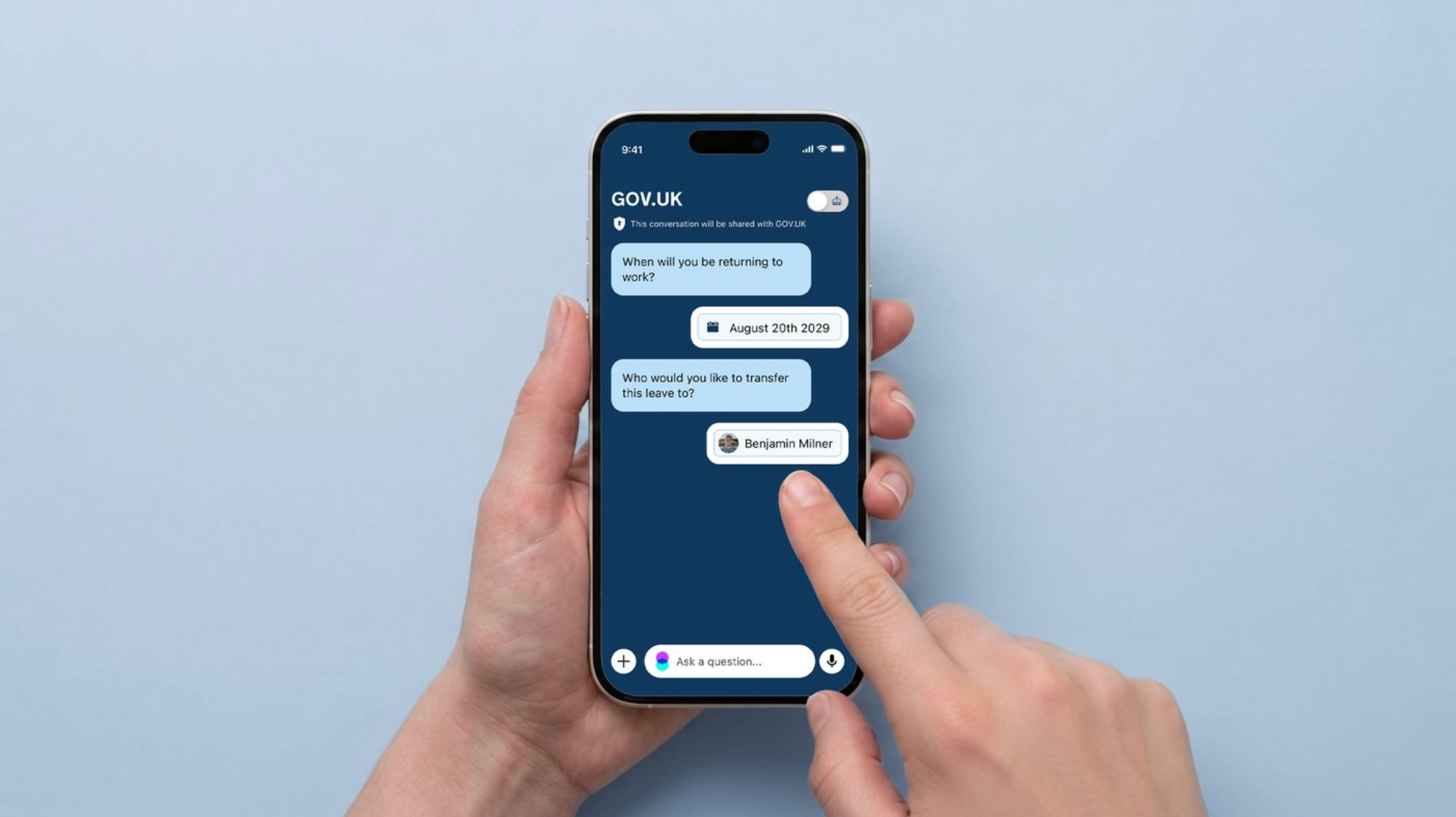
You worked recently with the Government Digital Service (GDS) on AI for gov.uk. How did you think about designing AI experiences for a very broad audience?
AW: It was about imagining gov.uk being accessed in a way where you talk to it, and it can go off and do different agentic tasks for you. Let’s say you’re moving home – it will change your address at 10 different agencies. Or it will update your blue badge for your parking permit.
Assuming that’s possible, what would the user experience be? And how do we make that accessible to everyone, because the government has a legal responsibility to make sure everyone can do it.
I read that one of the big challenges was showing how the AI actually works, rather than just sending back a black box response?
AW: Making something inspectable, something that you can interrogate, is really important, especially when you’re designing AI for older adults.
CGW: There is a bit of a trend in our work of giving materiality to things. Sometimes it’s very literal – we use books, and cards, and paper bags around phones. But even when we look at digital interfaces, we try to create something that has a familiar mental model in people’s heads.
For this project we thought about a to-do list, where the unit of doing is splitting a task into different sub-tasks. The hope is this makes AI more transparent, and more understandable.
How did you think about creating these experiences?
AW: We were trying to find examples of agency in the real world, and find parallels. So we spoke to a birthing doula. You’ve got the NHS, where you go and have your baby, and then you’ve got the doula who sits outside that system. Their role is to be your emotional support, and advocate for you when you interact with the NHS.
When you think of gov.uk, there are instances where you might be claiming benefits and you’re pouring your heart out. Then by mistake you tell it that you made one pound more than the threshold, and the doors slam shut. You’re not getting benefits.
We were thinking about a third space, where the user can feel comfortable. Where they can be much more intimate with the agent, and then maybe it accompanies you when it’s time to talk to the actual government.
CGW: We even spoke to a yacht butler. She was amazing – she has to interface between these very wealthy clients, and all the staff, which on a yacht is like 50 people.
The details are quite crazy. If one of the guests is on a paleo diet and doesn’t want to see any sugar, every time they interact with her, they shouldn’t have the sugar on the tray.
That’s obviously a more frivolous example. But it’s interesting to see the human expertise and the nuances people have in their professions, and try to mirror them in technology, which tends to be quite cold. Often what we’re trying to bring to projects are those unquantifiable aspects of life.
On your site you talk about that – bringing “empathy, wellbeing, delight” into client work. For some people those feel in conflict with AI…
AW: Often it’s about reintroducing friction. AI computes at a speed far faster than we can compute, and so sometimes you need to slow things down, which feels totally against technological progress, which is all about moving faster.
CGW: With Aperture, friction is a big theme, making it harder to access distractions. It was an AI-powered interface, but it was trying to show AI giving you less but better, rather than more and faster.
Until I was researching this interview, I didn’t know Aperture was an AI experience tbh…
AW: That makes us happy. We wanted to show what we were doing with AI, but we didn’t want it to feel like AI.
How do you stay on top of AI developments in a busy studio? How do you make time for people to experiment?
AW: When we finished the GDS project, Claude Code had just come out. It actually changed the way we might have done certain things, the fidelity of some prototypes we would have made.
So we got the team to re-run that project, based on what was now possible. It’s tricky to experiment while we’re doing a live client project for a bunch of reasons, like deadlines and confidentiality. But doing it that way was quite nice.
CGW: Every three months we do what we call a rewind, in which we come together and show the past projects and then we do a little presentation or workshop. It’s very casual.
It was interesting because a lot of our brilliant designers were showing us what is possible to do now with AI. But everything was a bit like, meh.
For me, what we create feels like a beautiful homemade risotto. And all these AI things feel like a frozen risotto. They’re faster, but so many details are wrong.
AW: The studio’s called Special Projects – we try to make things special. The value we offer comes from all these little details that add up. It would be really risky for us if we start piling everything into AI.
We would lose those little sparks from the trips to the doula, or Battersea Dogs & Cats Home. If we get rid of that, there would be no fuel to design with.
At risk of murdering your metaphor, the issue seems to be convincing clients that all that time spent ladling the stock into the risotto is worth it. That visiting the dogs’ home makes the work more meaningful, or more effective?
AW: That’s always been a challenge, even before AI. The value of design has always been so misunderstood.
CGW: There are definitely situations where frozen risotto is fine. Where someone needs something quick and cheap.
AW: Yeah, if you’re trying to make a dirt cheap pressure washer and sell it through Instagram with AI adverts, then you wouldn’t come to a studio like this. You wouldn’t see the value. It definitely requires a certain type of client that’s already sold on this intangible special-ness.
Does it change the role of the designer?
CGW: We’re becoming the bad cop. If someone in an organisation tells you, “We can do this with vibe coding,” then we have to say, “No, this is something that needs time.”
Rather than being innovation accelerators, we now need to be the brake pedal, which is completely different to how we’ve been trained. How do we communicate the difference that care creates?
It’s so interesting to me that your views on AI are quite complex…
AW: I feel like we’ve gone in these orbits with AI. You get this gravitational pull, and you’re using it a lot, and then it’s like you tail off and you don’t want to use it for a bit. Then you come back when something new comes out, or a model gets updated, and you try it again.
There have been months where the Claude Credits are, well, I don’t even want to say what we’ve been spending. But then there are months where we’re not using anything.
Sometimes we ask people for insights. They come back and present them, and they almost feel disassociated from those insights, because AI helped them do it. Like, it’s ok if you don’t like them, because it was the AI.
What’s really important – for people working in any kind of design agency – is that the human has to be able to stand up next to the work and defend it. It doesn’t matter where it came from, but they have to believe in it.
We’re looking at adjusting our internal process, raising the stakes a bit. Not to intimidate people, but to say, if we’re bringing a mix of synthetic and natural content to the table, you still have to believe in it. Ultimately, what’s really important is that our team retains that conviction behind the idea.